
The Productivity Quadrant
Working too hard backfires
For many professionals, the constant struggle is trying to get more done by working longer hours and packing the schedule full of tasks.
But research increasingly shows this isn’t the most effective or sustainable approach.
Studies looking at work patterns across countries have found little correlation between long hours and higher productivity.
Pushing beyond your mental and physiological limits can actually be counterproductive.
The common reaction is to just do more - work extra hours, take on more projects, fill every minute with activity.
But this simplistic approach often backfires because it ignores the complex neurochemistry that regulates human performance.
When you override signals like fatigue and loss of focus, you disrupt the natural ebbs and flows of key neurotransmitters.
These brain chemicals play key roles in motivation, social bonding, and adaptability. Forcing productivity by sheer willpower depletes your mental reserves and leads to diminishing returns.

Pushing through burns you out
Trying to “power through” and ignore what your brain and body are telling you may provide a short-term burst of output. But over the long haul, this unsustainable overdrive burns us out.
Motivation crashes when dopamine drops off.
Team cohesion suffers when oxytocin levels decline.
Adaptability and creative thinking fade when noradrenaline is drained.
Willpower alone simply can’t compensate for what your neurobiology requires to function well.
When you disregard your need for restoration and renewal, productivity suffers.
Pushing leaden mental muscles further into fatigue is like trying to sprint on exhausted legs - you end up stumbling. Without adequate recovery time, focus, and creativity stagnate.
A better solution: work with your neurochemistry
The key is aligning work habits with your brain’s natural biochemical rhythms.
True productivity stems from a symphony of neural and hormonal activity. Aligning work habits to tap into the function of key neurotransmitters lets you build a fulfilling work rhythm that lifts both well-being and performance.
Dopamine provides the spark of motivation. Structure tasks strategically to use dopamine’s role in driving you forward. Oxytocin forges social bonds. Nurture workplace relationships and team cohesion to tap into oxytocin. Noradrenaline fuels adaptability. Seek cognitive challenges to engage noradrenaline’s learning effects. Serotonin promotes resilience. Support healthy serotonin levels through managing stress, activity, sunlight, and sleep.
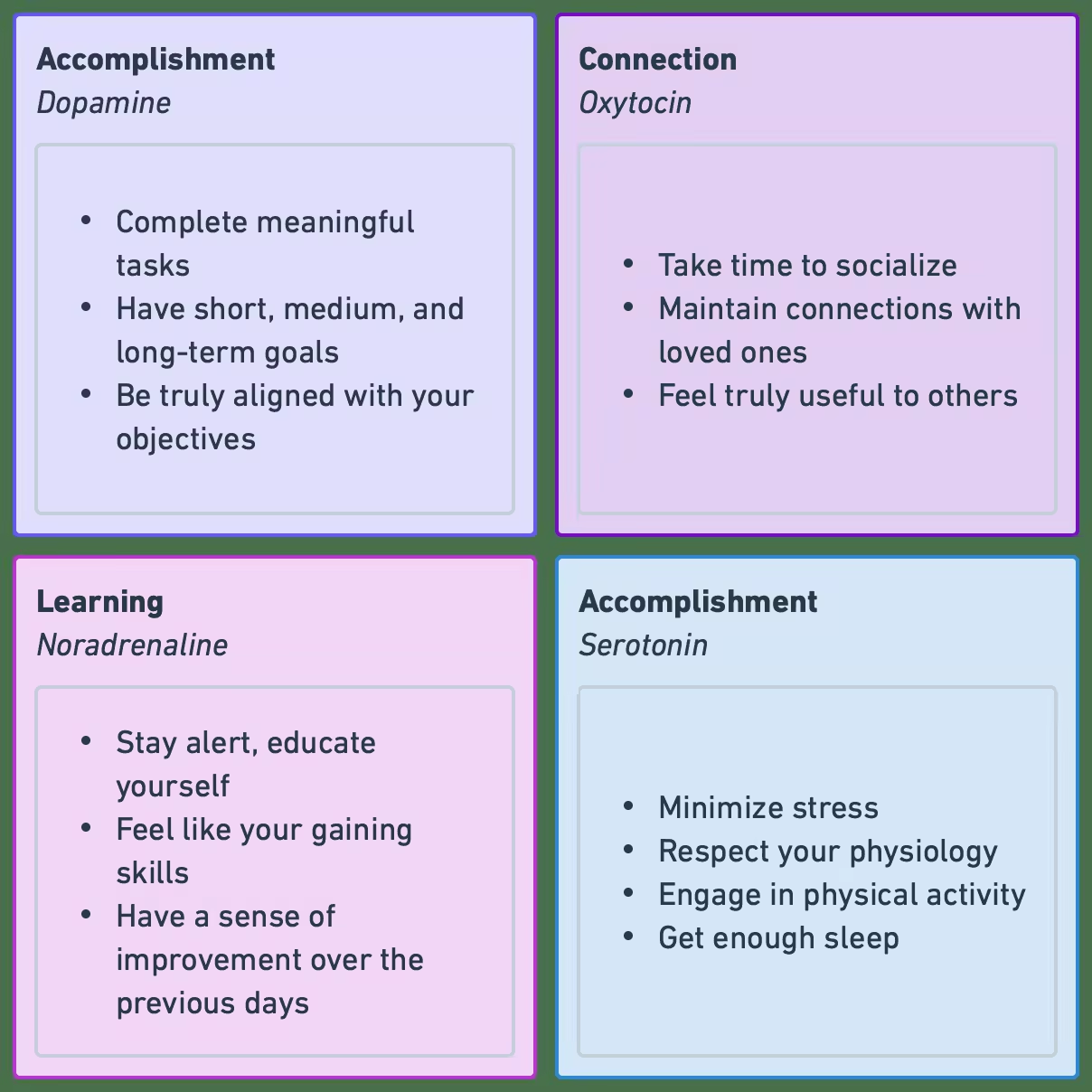
Some steps to take
Use dopamine for motivation
- Structure tasks and goals to provide a steady stream of small wins and sense of progress. These spur regular dopamine boosts that maintain motivation.
- Build in anticipatory rewards after completing key milestones. Looking forward to something pleasant drives dopamine release.
- Alternate intense focus periods with brief breaks to prevent dopamine dips from mental fatigue.
Allow Time for Neurotransmitter Replenishment
- Schedule true renewal periods like vacation. Coffee breaks alone do not restore you.
- Prioritize good sleep habits. Sleep reboots mental energy and restores neurotransmitter balance.
- Detach regularly from work to avoid burnout-inducing chronic stress. Manage stress proactively.
Build oxytocin for collaboration
- Build in bonding experiences for teams. Social activity triggers oxytocin flow.
- Support authenticity and trust in work relationships. These social cues boost oxytocin.
- Share wins collectively. Celebrating progress together taps into oxytocin.
Engage Noradrenaline for Adaptability
- Add variety and challenge in work. Novelty stimulates noradrenaline for learning.
- Run regular brainstorming and creative problem-solving. These flex mental agility.
- Structure fluid project teams vs rigid departments. This allows role rotation and cross-training.
Balance serotonin for resilience
- Make time for physical activity. Exercise helps boost serotonin levels.
- Get regular sunlight exposure. Sunlight impacts serotonin production.
- Prioritize quality sleep. Serotonin regulates healthy sleep patterns.
- Manage stress levels proactively. High stress depletes serotonin.
TL;DR
- Pushing too hard backfires - the flawed “work hard” solution fails long-term.
- Disregarding neurochemistry disrupts motivation, collaboration, adaptability and resilience.
- Allowing for neurotransmitter restoration keeps performance high.
- Aligning work habits with brain biochemistry creates a sustainable rhythm.
- Strategically structure tasks, goals, breaks and lifestyle habits to tap into neurochemicals’ role in productive work, and let your brain’s natural biochemical symphony carry you.